





 |
|
|
|
|
|
|
|
|
|
|
|
|
|
|
||||||||||||
 |
 |
 |
 |
|
||||||||
 |
 |
|
||||||||||
 |
 |
 |
 |
|
||||||||
 |
|
|||||||||||
 |
|
|||||||||||
 |
 |
|
||||||||||
 |
 |
|
||||||||||
 |
 |
|
||||||||||
 |
 |
|
||||||||||
 |
 |
 |
 |
 |
|
|||||||
 |
 |
|
||||||||||
 |
 |
 |
|
|||||||||
 |
|
|||||||||||
Claims Tranmission
Why Medical Claims Processing?
The health-care industry is flourishing with an ever-expanding pool of patients, medical practitioners, hospitals, and health care organizations. This correspondingly reflects in the multiplying number of Medical Claims. But due to inconsistent and non-professional claims processing practices, most doctors and other health-care providers are deprived of the privilege to get them paid quickly and efficiently. In this context, the choice of outsourcing to a professional service provider like Aspir'e Solutions proves to be a profitable alternative.
Medical Claims Processing at Aspir'e Solutions
Aspir'e provides both Electronic and Paper claim filing and processing services — dependant upon the insurance carrier. Professional (HCFA-1500) claims are undertaken. We offer a comprehensive suite of Medical Claims Processing solutions based upon integrated, client-customized technologies.
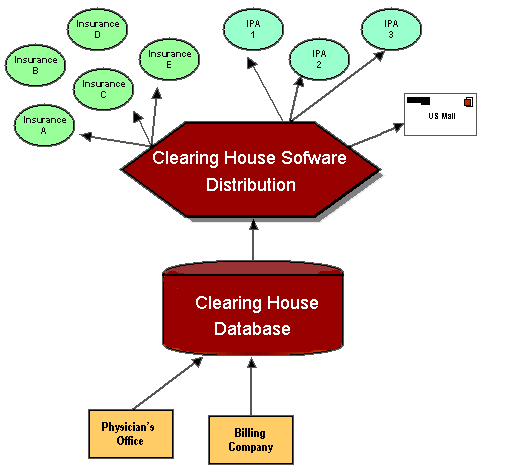
This section briefly outlines the claims processing or adjudication, system employed by most Medicare carriers.
Following shows step-by-step look at claims adjudication.
1. Claim is received: Claims are received by the carrier's mailroom and date-stamped. They are then microfilmed. If the claim includes any additional support documentation, such as an operative report, it is removed and separated so that each element can be microfilmed.
2. Claim is key punched or Data entered: After microfilming, claims are sent to data entry, the people in this department key the claims data into the carrier's computer system, enabling the carrier's computer to adjudicate claims.
3. Claim undergoes automated review: A computer analyzes claim. The automated review verifies necessary elements, such as the eligibility of the beneficiary, whether deductible has been met, basic coverage of the billed services and charge limits. At this point of process, a claim fails the automated review is suspended for manual review.
4. Development: Carriers usually contact the patient or physician by phone or mail for missing information. It is important to produce the information as quickly as possible because these claims can be rejected if the carrier cannot obtain the necessary information within a certain time period.
5. Manual Review: A claims examiner or reviewer does manual review of a claim. Usually, an examiner has received no formal training in medicine or medical terminology but has been trained to review claims for medical necessity using guidelines and parameters created by the carrier's medical director and other medical personnel. The examiner looks at the claim and supporting documents sent along with the claim.
6. Initial Determination: After all the information is reviewed, the examiner makes one of three decisions regarding the claim.
· Claim is paid. Explanation of benefits and check are issued.
· Claim is denied. Appropriate explanation of benefits is generated and the denial notice is issued.
· Claim partially paid. Appropriate explanation of benefits and check is issued.
We handle multiple lines of Medical Insurance Claims that cover an array of health plans and medical, Durable and Medical equipments, No-Fault and Workers Compensation encounters.
We offer fully automated payment solutions. Leading Medical Claims Processing software is used for scanning insurance claim forms and automating the collection and processing of claim payment data. With the support of highly skilled professionals, we successfully accomplish each project.
Why Aspir'e solutions?
Medical Claims Processing is a tedious and time consuming process and we do our best to make it as easy and useful as possible. We have been providing comprehensive Medical Claims Processing solutions to doctors and health care organizations. Significant cost saving and the fastest turn-around-time are the two main reasons for outsourcing medical claims processing to us.
Key Features